
AI’s Strategic Impact on
BFSI & Commerce
Five days at the India AI Impact Summit 2026 in New Delhi revealed a clear signal: the architecture of banking, payments, and identity is shifting from passive software to autonomous Agentic AI — and fraud is evolving with it.
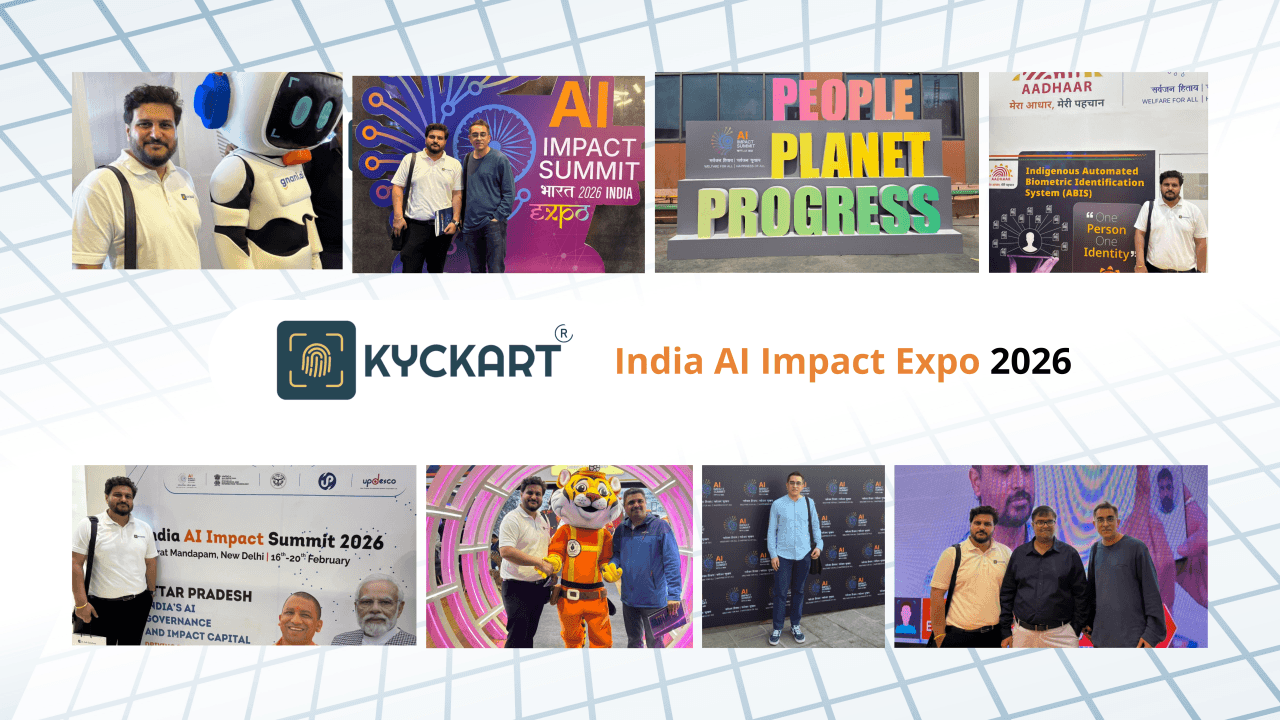
I’m Lokesh Chaudhary, Founder and CEO, KYCKART. Last month, we participated in the India AI Impact Summit 2026 in New Delhi. It was five intensive days at the cross-section of global tech leadership, policy-making, and financial innovation.
I wasn’t just looking at new gadgets or listening for buzzwords. I was looking for the “signal” in the noise. And the signal was unmistakable: the shift is here, and it’s architectural.
Welcome to the 2nd edition of KYCKART Intel[1]. Here is what the summit revealed, and what it means for every BFSI leader navigating the AI transition.
The Agentic Shift
From passive software to autonomous, goal-driven agents
The conversations at the India AI Impact Summit 2026[2] confirmed what we had been tracking. We are moving away from the era of “passive software”, the rigid toolsets deployed for decades. We are entering the era of Agentic AI[3]. We are no longer just building tools. We are building autonomous, goal-driven agents.
Agentic Payments
Integrated Intelligence
Major platforms such as Razorpay and NPCI are embedding Agentic Payments directly into LLMs like Claude[4], shifting transactional agency from humans to AI.
Human oversight → AI agency
Sovereign Payments
Localized Computing
NPCI and NVIDIA are building a Sovereign AI layer for India’s payment rails[5], ensuring rapid, localized AI compute for real-time transactions within Indian jurisdiction.
Cloud dependency → on-soil intelligence
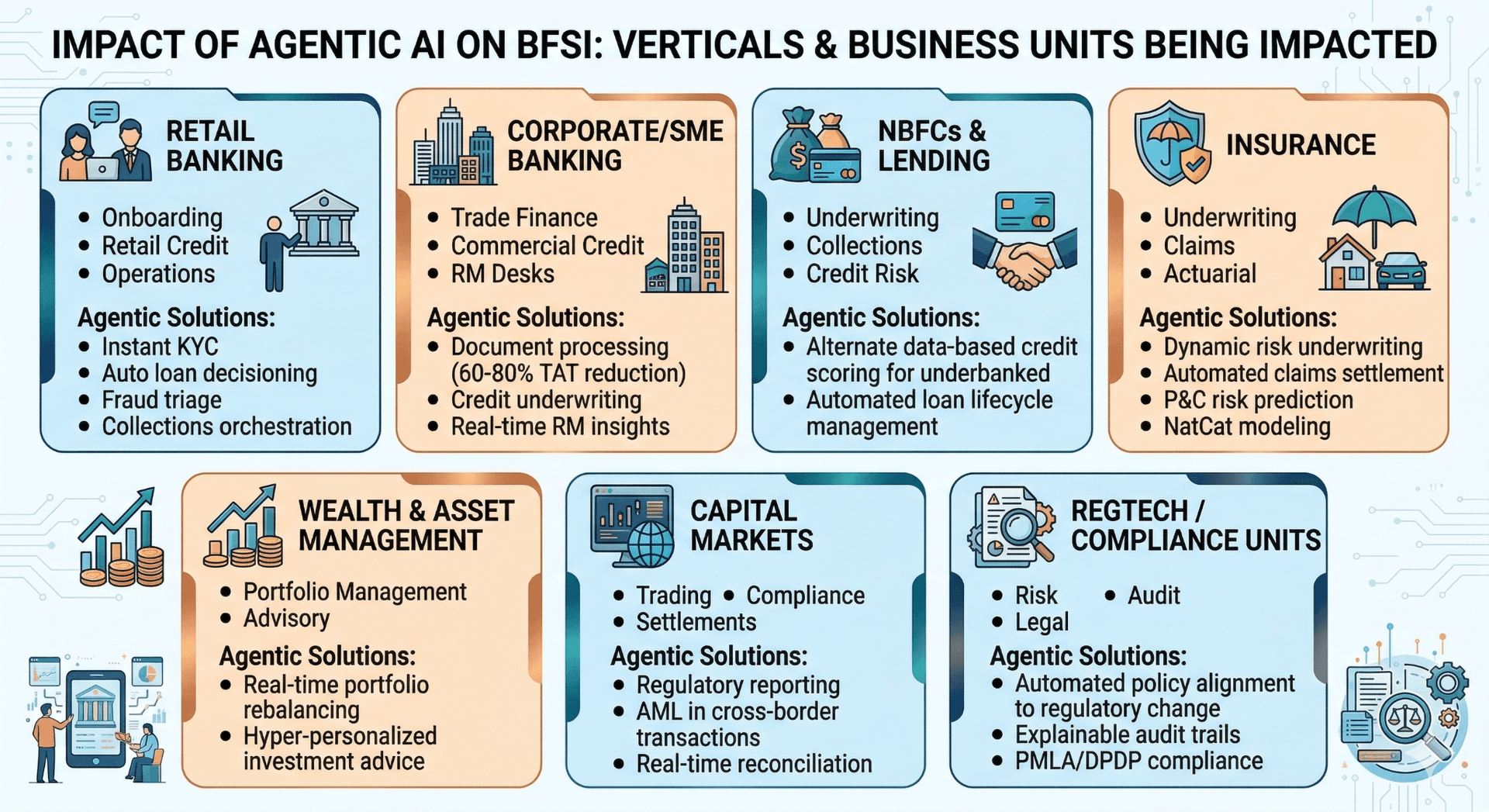
Agentic AI impact across BFSI verticals: Retail Banking, Corporate/SME Banking, NBFCs & Lending, Insurance, Wealth & Asset Management, Capital Markets, and RegTech/Compliance
For those of us in Banking, Insurance, and Fintech, this is a double-edged sword. It unlocks a level of scale we’ve never seen before. It also demands a massive evolution in how we handle real-time fraud prevention and identity verification.
The Shift to 'Know Your Agent'
Deep Dive: Identity in the era of Agentic Commerce
One of the most consequential themes emerging from the summit was the rise of Agentic Commerce. We are moving from interfaces designed for humans to “login as agent” paradigms. Autonomous agents now execute transactions, conduct credit underwriting, and orchestrate tokenized value exchanges. As a result, the fundamental identity parameter shifts from KYC to ‘Know Your Agent’ (KYA).
“We are no longer just building tools. We are building autonomous, goal-driven agents — and the identity infrastructure hasn't caught up.”
Simultaneously, traditional AI in Banking is maturing into hyperautomation. The highest impact comes from blending human judgment with machine intelligence, not replacing one with the other. We are transitioning towards AI as a core trust infrastructure. It powers real-time fraud detection without compromising explainability, data privacy, or auditability.
Identity
KYC → KYA: agent provenance, authorization scope, and behavioral audit trails.
Orchestration
Multi-agent pipelines execute credit, payments, and collections without human loops.
Compliance
Real-time explainability and revocation mechanisms are built into every agentic transaction.
Highlights: Panels & Talks to Watch
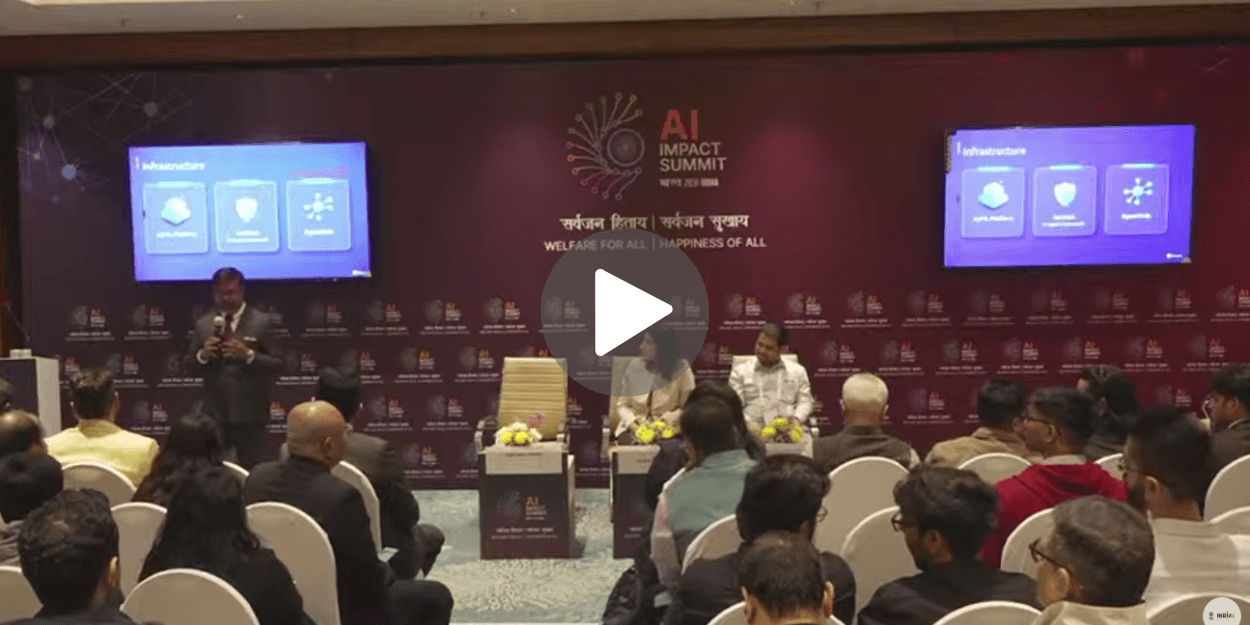
India AI Impact Summit 2026 — sessions that set the industry narrative
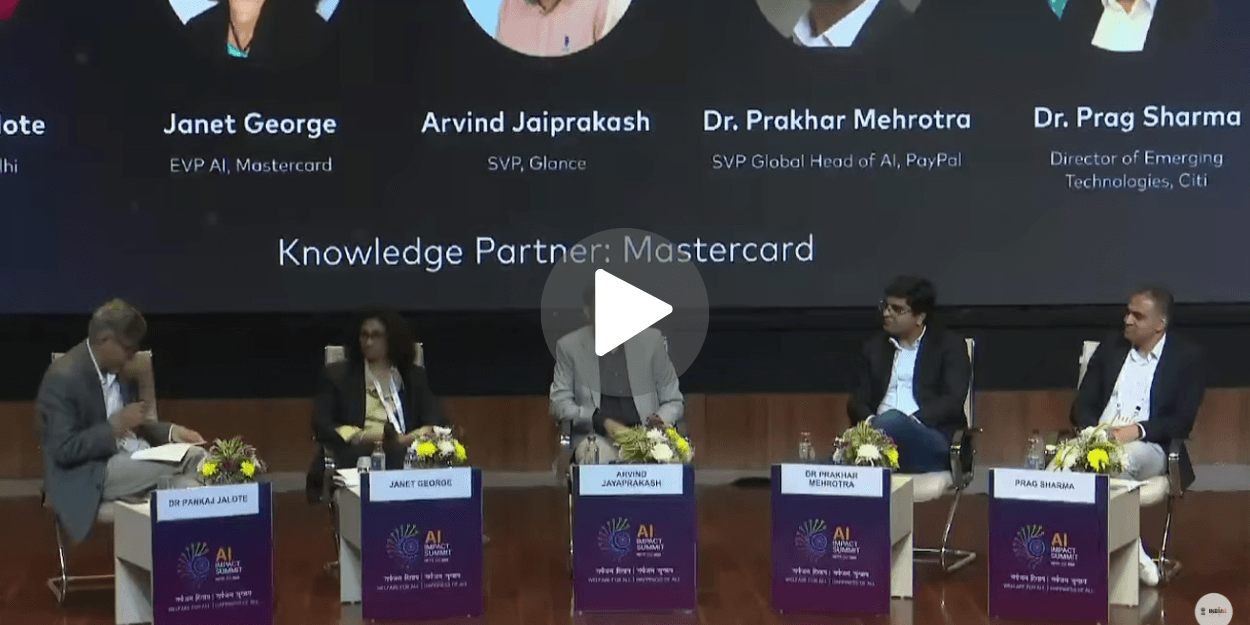
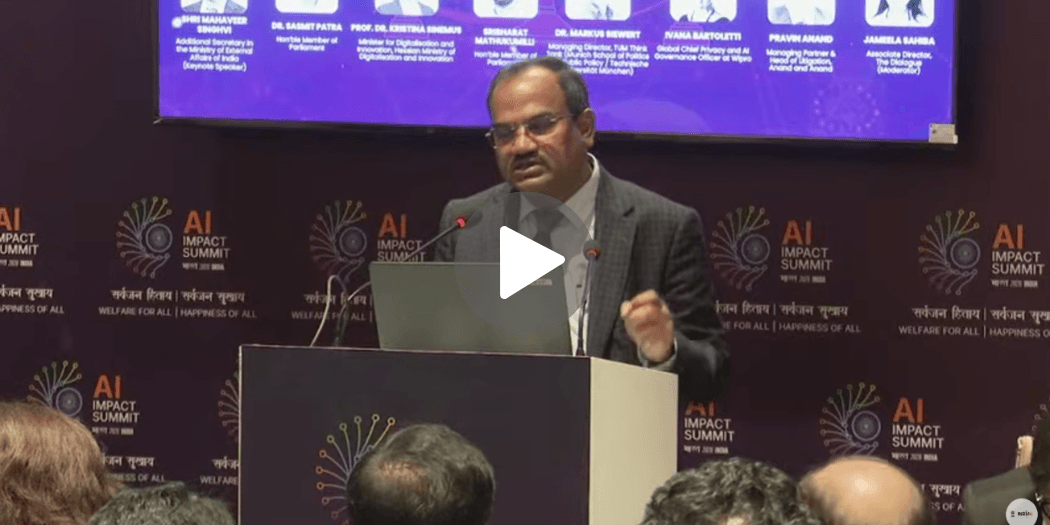
The summit assembled leaders from IndusInd Bank, IndiaAI, FICCI, the Reserve Bank of India, Policybazaar, PhonePe, IIT Bombay, NVIDIA, Mastercard, Future Crime Research Foundation, and Paytm.
These three sessions defined the trajectory of AI in financial services:
Emerging Threats: What’s New in 2026?
Adversarial AI mirrors the adoption of productive AI
As discussed extensively during the summit, the adoption of AI is unfortunately mirrored by adversarial advancements. KYCKART is actively monitoring the following systemic risks that compliance and fraud teams must prioritize:
The integration of deepfakes and generative tools is bypassing traditional biometric and document verification, scaling synthetic identity fraud at unprecedented speed and volume.
Agentic Commerce creates a new attack surface: automated AI agents execute complex, rapid transactions lacking traditional human-in-the-loop safeguards. This exposes KYA vulnerabilities that existing fraud controls cannot address.
Sophisticated threat actors are licensing customized LLMs designed specifically to breach banking protocols and generate targeted phishing vectors at extreme scale. This industrializes what was once a manual, low-volume attack.
A lack of explainability in proprietary 'black box' credit and risk models is triggering rigorous scrutiny under the newest RBI and global compliance mandates. Institutions face regulatory exposure if they cannot explain model decisions.
Key Insight
Embedded Governance: As platforms expand reliance on AI for critical decisioning, legacy rule-based controls will fail. Hence, TRUST must be woven securely into algorithmic frameworks by design. This ensures that innovation does not outpace supervisory oversight and systemic accountability.
The summit made it clear that the next competitive frontier in BFSI is not just the speed of AI adoption. It is the quality of governance woven around it. Teams that build explainability, auditability, and revocation mechanisms into their AI infrastructure from day one will be the ones that regulators trust and customers choose.
Frequently Asked Questions
KYCKART Intelligence
Ready to build AI-native identity
and fraud infrastructure?
As Agentic AI reshapes BFSI, the gap between institutions with embedded governance and those without will determine who survives regulatory scrutiny, and who doesn’t.
Talk to a Risk Expertarrow_forward