
PHP2Shell and the October 2026 Cyber Wave: What Happened and What to Check Now
PHP2Shell (CVE-2026-109618 and CVE-2026-109619) and recent supply-chain breaches expose web servers and AI keys. Review patched builds and remediation steps.
Company · Blog
Insights on KYC compliance, fraud prevention, regulatory updates, and the future of digital identity in India's financial ecosystem. Written by practitioners, for practitioners.

PHP2Shell (CVE-2026-109618 and CVE-2026-109619) and recent supply-chain breaches expose web servers and AI keys. Review patched builds and remediation steps.

Learn what Form 26AS, AIS, and ITR prove during lender income verification. Understand source-deducted tax, reported transactions, and declared taxable income.

Who is an ultimate beneficial owner in business KYC? How Indian lenders verify corporate ownership thresholds, unmask shell companies, and prevent loan fraud.

See how Indian banks and NBFCs run sanctions and PEP screening under RBI 2025 KYC Directions and PMLA, triage match alerts, and report to FIU-IND.

Learn how UPI Circle delegated payments create new fraud risks for Indian banks and discover the transaction monitoring protocols needed to stop them.

A virtual-camera injection attack feeds fake video into a video KYC app. See how it works, what the RBI's V-CIP text says, and what to ask your vendor.

Explore how real-time KYC API latency and sub-500ms identity verification boost loan conversions, reduce funnel drop-off, and build fault-tolerant lending rails.

Compare Account Aggregator rails and PDF bank statement analysis in lending. Learn how fraud risk, drop-off rates, and hybrid underwriting shape conversion.

The RBI DLA directory is a reporting list, not a licence register. See what banks and NBFCs must report, how Google Play uses it, and how to check an app.

Learn how flow-based MSME underwriting uses GST returns and bank reconciliation to verify real cash flows, catch circular trading, and flag turnover inflation.

Cross-border customers get KYC'd repeatedly because countries enforce rules differently. GLEIF's vLEI is a proposed fix, not required in India yet.

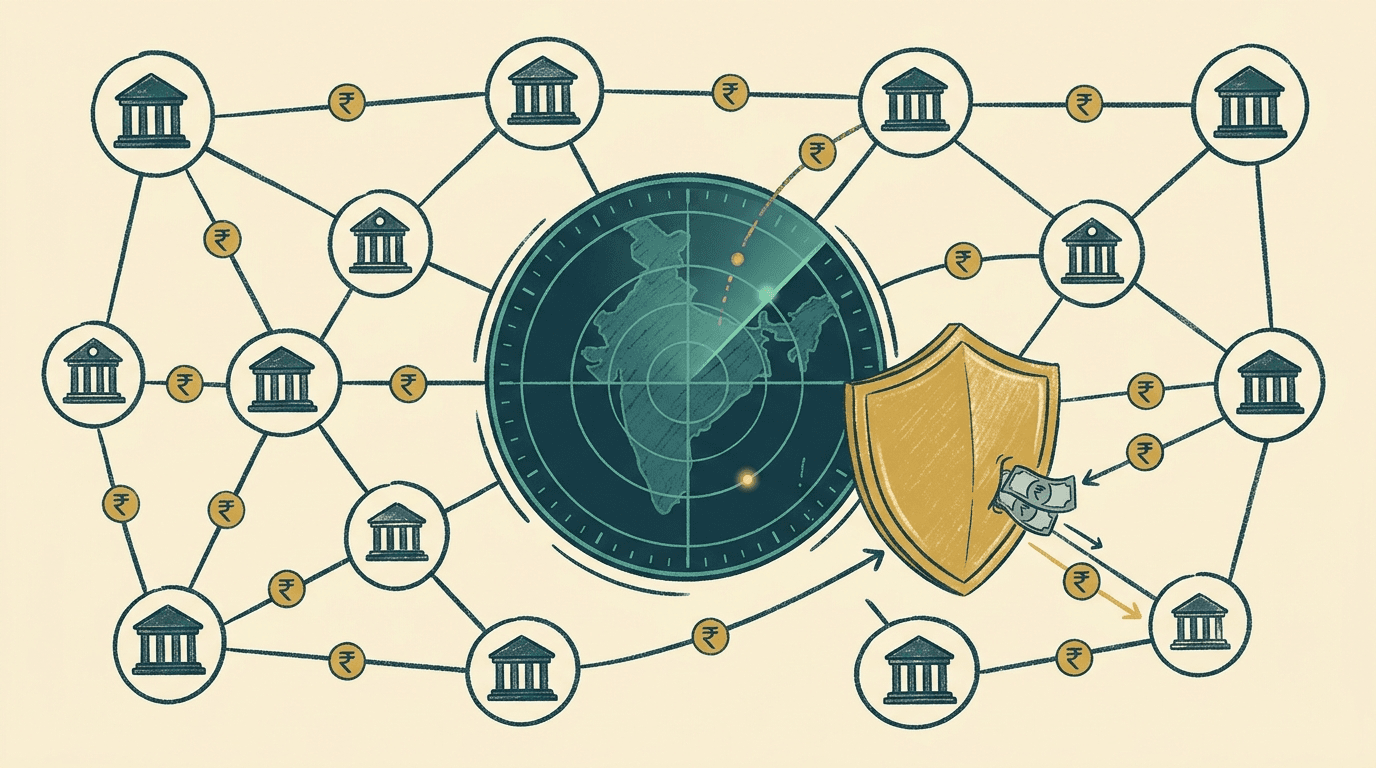
Learn how graph analytics mule account detection uncovers fraud topologies, powers MuleHunter.ai, and aligns with RBI's proposed debit hold directions.

Learn why Indian banks need real-time fraud detection APIs to counter rapid attacks, aligning with RBI Governor directives and 89% of consumer expectations.

Google AI Overviews influence 41% of Indian financial purchases. Learn how the DICA pattern guides B2B RegTech procurement and RBI outsourcing compliance.

Consumer trust in digital lending platforms in India lags payments by 22 points. Discover DCII 2026 findings, RBI borrower protections, and credit reforms.

EPFO KYC update: why updating bank account, PAN, and Aadhaar on the Unified Member Portal matters, step-by-step process for members and employers, and what banks and lenders should verify.

How police verification works in India across tenant, employee, and loan-guarantor checks: online police portals, CCTNS backend, step-by-step verification process, and legal obligations.

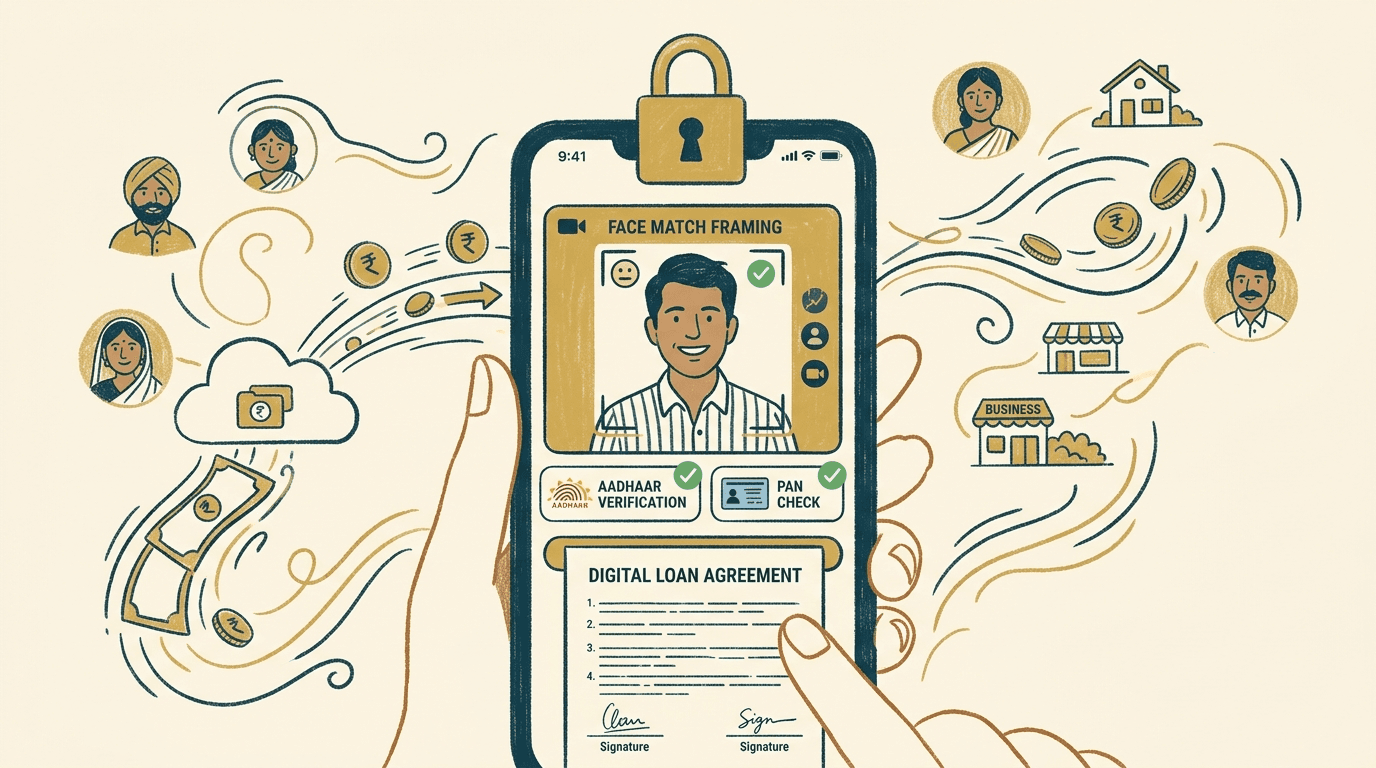
Digital lending KYC: what RBI's Digital Lending Guidelines and Master Direction require for REs and LSPs - approved KYC modes, RE-driven verification, data privacy limits, and compliance checklists.

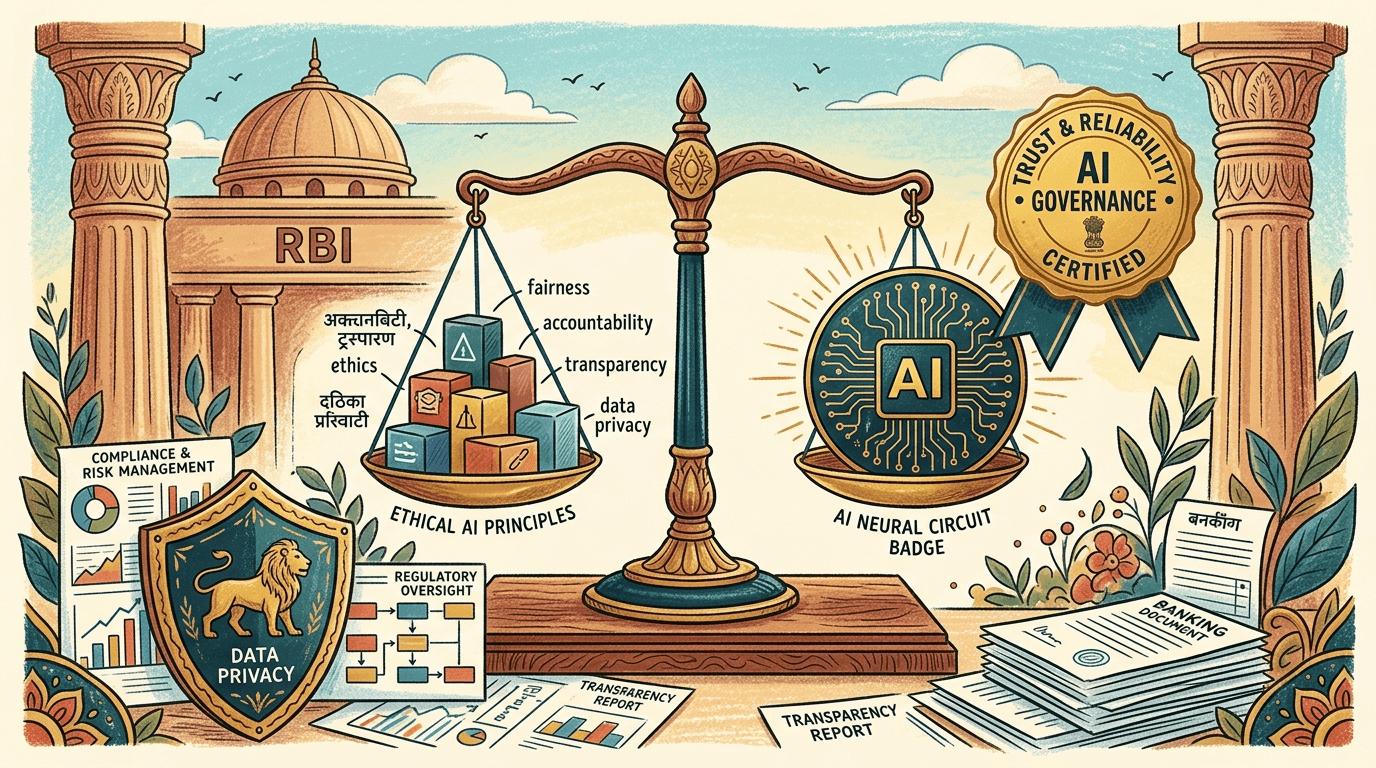
RBI's FREE framework for artificial intelligence in Indian banking: Seven Sutras, Six Functional Pillars, model risk governance, and what BFSI compliance and risk teams must prepare for.

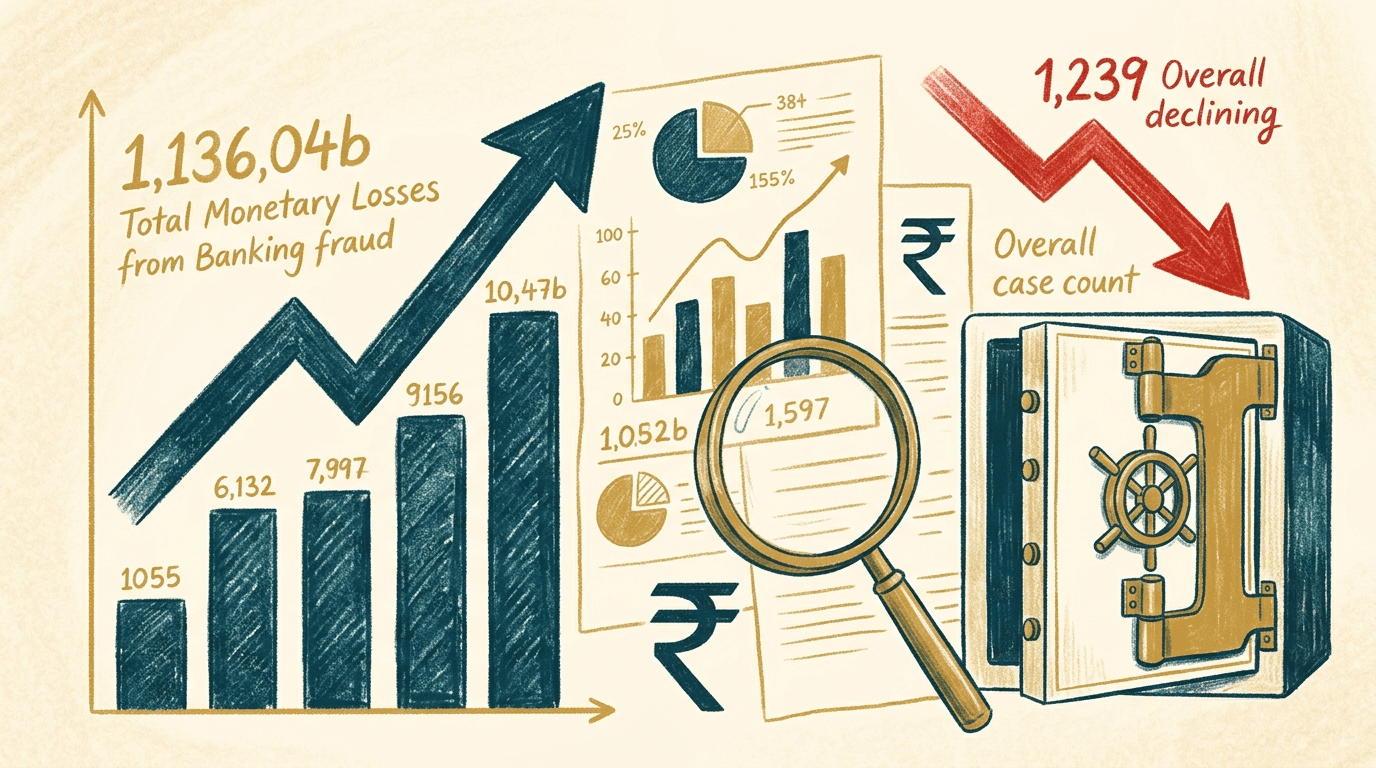
RBI FY26 banking fraud data shows total frauds rose 166% to 36,075 cases while value dropped 46.7% to ₹13,930 crore. Digital payment fraud now accounts for 85% of cases.

MuleHunter AI, DPIP, and IDPIC: how India's central intelligence stack combats mule account networks, why mule accounts power cyber fraud, and how banks and fintechs can defend against them.

Udyog Aadhaar was replaced by Udyam Registration in 2020. How the two differ, what RBI's grandfather clause does and doesn't cover for existing loan files, and the open question lenders still face on legacy UAN records.

What banks, NBFCs, and fintech lenders must verify on an Udyam Certificate: dynamic QR code authenticity, PAN/GSTIN triangulation, and PSL eligibility rules.

What a TAN number is, who needs one, and how to verify a business's TAN before treating it as a valid counterparty in onboarding or vendor checks.

Compare bank account verification methods in India: penny drop micro-deposits, Account Aggregator consent flows, and direct API checks. What each validates, where each fits, and their fraud limitations.

How PAN verification works in India - what it checks, how to verify a PAN card's validity and name match, and where it fits in KYC onboarding for banks and NBFCs.

What a CIN number is, how it's structured, and how to verify a company's CIN or registration number before onboarding it as a BFSI borrower or vendor.

Who is a Data Protection Officer under DPDP Act Section 10(2)(a), Section 8(9) contact rules, and how Indian banks and NBFCs align DPO, CISO, and CCO roles.

The DPDP Rules 2025 and the DPDP Act commence in three tranches from 13 November 2025. What each tranche brings into force for a bank or NBFC.

Who gets designated as a Significant Data Fiduciary under DPDP Act Section 10, what Rule 13 requires, and how it impacts Indian banks and NBFCs.

A consent manager is a Board-registered platform for managing consent under India's DPDP Act. Rule 4 isn't in force yet; commencement is expected around November 2026.

The Data Protection Board of India was established on 13 November 2025, but its complaint, inquiry and penalty powers commence in stages from the one-year mark.

A data principal is the individual whose personal data is processed under India's DPDP Act. The four Chapter III rights, and what a bank or NBFC will have to do when a request arrives once the Rule 14 rights provisions commence.

Is skip tracing a loan defaulter exempt from DPDP Act consent rules? Yes, under Section 17(1)(f) - but only with conditions, and RBI's rules still apply.

ED raided 8 premises in a ₹450 crore bank loan fraud case tied to Santosh Overseas Ltd, alleging loan funds were diverted through shell companies.

What is a data processor under India's DPDP Act, and what should BFSI institutions check before onboarding a vendor that processes customer data? A practical 7-point checklist for compliance and risk teams.

Fake loan apps harvest phone data and coerce repayment; RBI has repeatedly enforced against them. The AI-deepfake angle remains anticipated, not yet documented.

In 2026, I4C signed an AI-training MOU with RBIH and the Supreme Court ordered RBI to issue a mule-account debit-hold SOP. Here's what changed.

CKYC 2.0 is a reported overhaul of India's Central KYC Records Registry: real-time retrieval, AI-assisted deduplication, and per-record confidence scoring, with banks and insurers reported, but not officially confirmed, to launch from August 2026.

AML software automates the four PMLA-mandated functions: transaction monitoring, PEP screening, risk scoring, and case management. What Indian BFSI compliance teams should check before buying.

Fraud detection differs by BFSI segment: banks, insurers, and fintechs answer to different regulators and see different fraud. What to check before buying a vendor.

SMS-based “KYC update” scams surged 146% in Indian banking, per BioCatch's 2026 fraud-trends report. How the scam actually works, the warning signs, and what it means for banks and NBFCs trying to stop it at the source.

Bank fraud in India: recognize phishing, smishing, and vishing warning signs, and see how RBI's 2024 Master Directions help banks detect and report fraud.

A data fiduciary is the person or organisation that decides why and how personal data is processed under India's DPDP Act, 2023 - the role carrying most of the Act's consent, notice, security, breach-notification, and grievance obligations, plus extra duties once designated a Significant Data Fiduciary.

GST check: how to verify a GSTIN online using the GST portal's free Search Taxpayer tool, what the 15-digit number means, why status checks matter for lenders, and common reasons a search fails.

What debt collection management software does, the core features BFSI teams should evaluate (case management, payments, compliance tracking, integrations), and how it differs from loan recovery and accounts receivable software.

The documents needed for a KYC application in India, how to choose between branch and online submission, and how to complete a KYC update or check status.

India's DPDP Act, 2023: consent rules, data principal rights, breach notification, penalties up to ₹250 crore, and its phased 2025-2027 rollout status.

eKYC is RBI's term for Aadhaar-based e-authentication, not a synonym for 'Digital KYC.' How eKYC's three modes work, who can use them, and where document and online verification fit in India.

How Aadhaar verification works: status check, OTP verification, biometric, QR, and offline e-KYC via UIDAI, and how RBI's KYC rules treat Aadhaar.

CKYCRR stands for Central KYC Records Registry, the CERSAI-run system that lets banks, NBFCs, and insurers reuse a customer's verified KYC record instead of collecting it again.

Bank fraud in India spans phishing, digital arrest scams, UPI fraud, and money mules. The warning signs, how to report fraud fast, and what RBI requires of banks.

Penny drop verification confirms a bank account by crediting Re 1 and matching the registered name. How the process works, its regulatory backing under PFRDA and SEBI, and how it differs from RBI's RTGS/NEFT name look-up facility.

A step-by-step walkthrough of how BFSI lenders in India collect and recover overdue loans: SMA/NPA staging, RBI's recovery-agent conduct rules, SARFAESI notices, and the DRT process.

RBI's KYC Directions require ongoing due diligence, not a one-time check. KYCKART Intel maps the four regulatory obligations behind a living customer record, why RBI's November 2025 restructuring makes this live now, and where DPDP draws the line.

A KYC and AML glossary for Indian BFSI compliance teams: EDD, CKYCRR, POA, PMLA, PEP, STR, CTR, and 18 more terms, each defined with the RBI, CERSAI, and FIU-IND regulatory detail behind it.

What KYC means under RBI's rules: the regulatory definition, the PMLA/Master Direction backbone behind it, how it fits into CDD and EDD, and the real penalties banks and NBFCs face for getting it wrong.

V-CIP gives accounts full face-to-face status under RBI rules. Aadhaar OTP e-KYC does not. This guide explains what that distinction means for compliance, onboarding design, and product decisions at banks, NBFCs, insurers, and fintechs.

A mule account passes KYC, transacts normally, then funnels stolen money at speed. This guide explains what mule accounts are, the four types your detection model must cover, and the signal categories that catch them after onboarding.

Why one-time KYC is quietly costing Indian BFSI at the front door, inside the book, and at the exit. A lifecycle study of verification decay — and the single discipline that fixes it across onboarding, portfolio monitoring, and collections.
A fraudster rejected at one institution can walk to the next one the same afternoon with the same face and a different name. Nobody connects the dots. KYCKART Intel maps the blind spots in India's KYC infrastructure and the case for a shared fraud intelligence layer.

A data-driven case for why Collections and Fraud leaders must treat fraud intelligence as a P&L imperative, not a compliance checkbox. 6 cost dimensions, 15+ cited Indian NBFC sources.

AI-generated fake statements surged 180% in FY2025. KYCKART Intel maps all four tampering methods, explains why most BSA platforms stop at Layer 2, and lays out the 5-pillar authenticity-first stack that stops both edited PDFs and fully synthetic fakes.

Billions of Aadhaar photocopies sit with no cryptographic assurance and no audit trail. UIDAI's new OVSE framework fixes this — KYCKART Intel covers the 4 verification methods, top BFSI use cases, and how it delivers built-in DPDP compliance.

Five days at the India AI Impact Summit 2026 revealed one clear signal: banking, payments, and identity are shifting from passive software to Agentic AI. KYCKART Intel maps the rise of 'Know Your Agent', Sovereign Payments, and four emerging adversarial threats.

₹36,000 crore in banking fraud — a 194% surge. KYCKART Intel maps the Volume vs. Value paradox and the five AI-powered tactics defining fraud in 2026, from Deepfake KYC to Digital Arrest Scams 2.0.