
Why Consumer Trust in Digital Lending Platforms in India Lags Payments by 22 Points
Consumer trust in digital lending platforms in India lags payments by 22 points. Discover DCII 2026 findings, RBI borrower protections, and credit reforms.
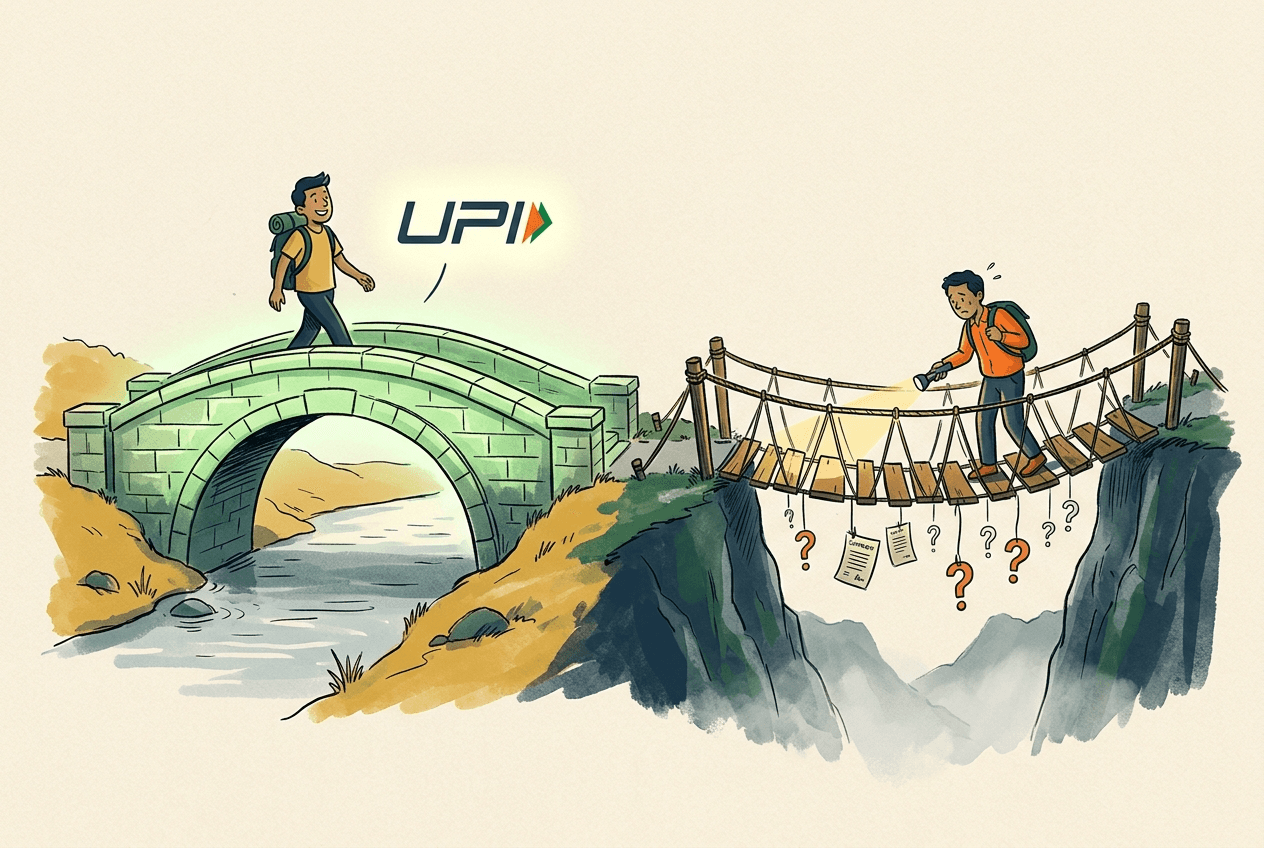
Indian consumers trust digital payment apps 22 points more than digital lending apps, according to the inaugural Digital Credit and Inclusion Index 2026. While UPI payments feel safe and fast, borrowing triggers deep anxiety over hidden fees, aggressive recovery, and opaque credit checks. To close this gap, lenders and fintechs can adopt plain cost disclosures, consent-based cash-flow checks, and fair recovery practices.
Where things stand (September 2026)
- Device lockout ban: Under the Reserve Bank of India’s August 2026 Responsible Business Conduct Directions, commercial lenders will be barred from remotely freezing borrower phones to collect debt once the rule takes effect on 1 January 2027.
- Digital lending rules: Central bank directions have required unbiased loan displays and direct account transfers since May 2025.
- Standard fee disclosures: Mandatory Key Facts Statements with all-inclusive Annual Percentage Rate disclosures have applied across all regulated lenders since October 2024.
What is the Digital Credit and Inclusion Index, and how does India score?
India scored 55.85 out of 100 on the inaugural index, placing the country in the “Emerging and Served” band with sound rails but uneven use.
The Digital Credit & Inclusion Index (DCII) 2026[1], published by Amazon Pay India and the Pahlé India Foundation (PIF), evaluated credit access, adoption, and impact across 5,149 respondents in 100 cities. The sample was weighted by district UPI volumes across five zones, studying urban centers without assessing rural farm credit.
The composite score of 55.85 places India in the middle tier of 50 to 75 points. The index tracks three core pillars:
- •Access Pillar (61.24): Leads the index, driven by smartphone access and digital onboarding rails.
- •Adoption Pillar (57.17): Captures regular platform engagement, though borrowing remains selective.
- •Impact Pillar (49.16): Lags behind, showing a 12.08-point gap between access and financial resilience.
Entry barriers have fallen: 94.4% of users recognize a digital credit tool, 54% feel comfortable with no-cost EMI plans, and only 11.7% have never heard of digital credit.
Why do consumers trust payment apps 22 points more than digital borrowing?
Users trust the speed and safety of digital payments, but roughly 35% express little or no confidence in borrowing on those same apps.
Within the DCII Adoption pillar, trust scores show a sharp split. Users report strong trust in platform security (77.9), reliability (75.0), and daily payments (74.4). Yet confidence in borrowing on the exact same apps drops to 52.5.
This 21.9-point split, reported as a 22-point gap, is the largest trust deficit in Indian fintech. While only 13% of users doubt payment safety, 35% express deep skepticism about borrowing.
A joint study by Dvara Research and Ken Research[2] shows why this trust gap exists. Daily payments give instant confirmations. Borrowing triggers fears of hidden interest fees, unexpected penalties, and harsh recovery calls. In the DCII survey, while 52.4% of respondents have borrowed digitally, borrowing frequency scores only 58.60 out of 100, reflecting selective rather than routine borrowing.
| Index Pillar or Metric | Score (out of 100) | Measured Consumer Outcome |
|---|---|---|
| Access Pillar | 61.24 | 94.4% of surveyed users know a digital credit option |
| Adoption Pillar | 57.17 | 52.4% have tried credit, but routine borrowing stays low |
| Impact Pillar | 49.16 | Lags Access by 12.08 points; reveals low financial resilience |
| Payments Confidence | 74.4 | Only 13% report low confidence in payment security |
| Borrowing Confidence | 52.5 | 35% report little or no trust in app-based borrowing |
How are Indians using digital credit, and why does emergency borrowing lag?
Most digital borrowing in India pays for consumer goods, while families avoid loan apps during sudden financial emergencies.
The DCII report shows that over 59% of users take digital credit to buy goods like phones, laptops, and home appliances via instalment plans. The Productive Use score is 43.19 out of 100, with 56.2% of active users scoring zero because borrowing finances short-term consumption rather than income generation.
When facing unexpected emergencies, consumers avoid digital credit. About 48.2% rely on personal savings, while only 6.9% turn to digital loan apps. Just 3.4% use Buy Now, Pay Later (BNPL) accounts.
Frequent users show different habits. About 64% of frequent users borrow productively for business capital, upskilling, or assets. In contrast, only 24.8% of aware non-users and 17% of non-digital citizens borrow for productive goals.
Why are Tier-2 cities outpacing metropolitan centers in digital credit adoption?
Tier-2 cities lead India in digital credit demand across every demographic group, recording an average score of 58.64 compared to 53.10 in Tier-1 cities.
DCII data shows Tier-2 cities beat Tier-1 metros by 5.54 points and surpass Tier-3 towns (55.77). This lead holds across age groups, income levels, education brackets, and jobs.
Tier-2 cities show greater gender balance, with a male-female index gap of 2.8 points versus 9.1 points in metros. Nationwide, salaried women outscore salaried men by 2.0 points (62.0 versus 60.2).
These figures track user demand and credit adoption, not loan default or bad-debt rates. The high Tier-2 score reflects ambitious households using formal credit to buy durable goods and improve living standards.
How does informal income lock 300 million workers out of digital underwriting?
Standard underwriting rules turn away roughly 300 million informal workers without formal pay slips, even when they run active digital payment histories.
Income and job type form the sharpest dividing line. Respondents earning under ₹30,000 monthly trail higher earners by 11.2 points on the index. Informal workers, such as gig staff and daily wage earners, lag salaried and business peers by roughly 11 points.
Standard scorecards rely on salary slips, excluding informal workers who earn cash daily or run small shops via merchant UPI.
Digital public rails offer a better way. Data from Sahamati[3] shows that the Account Aggregator (AA) network helped disburse ₹3.82 lakh crore across 3.68 crore accounts in FY26. About 18.2% of these borrowers were new-to-credit users with no prior credit history.
Adding Goods and Services Tax Network (GSTN) returns, tax records, and Employees’ Provident Fund Organisation (EPFO) data to the network enables consent-based cash-flow underwriting without intrusive phone permissions.
What regulatory guardrails protect borrowers from aggressive digital lending practices?
The Reserve Bank of India has introduced strict rules on fee clarity, cooling-off rights, and collection conduct to rebuild borrower trust.
Under the Reserve Bank of India (Digital Lending) Directions, 2025[4], multi-lender platforms must display loan offers without bias. Aggregator apps cannot use deceptive screen tricks to push one partner over another.
Under the central bank’s Key Facts Statement circular[5], lenders must provide a one-page sheet detailing the all-inclusive Annual Percentage Rate (APR), processing fees, instalments, and recovery charges. Borrowers receive a compulsory cooling-off period to exit without penalty by repaying principal and proportionate APR.
In August 2026, the central bank issued the Reserve Bank of India Responsible Business Conduct Directions[6] for commercial lenders. Starting 1 January 2027, the rule will prohibit commercial lenders from remotely locking borrower phones or laptops to force repayment. Device loans carry narrow exceptions with 30 days of notice and gradual 60-day restrictions, while preserving emergency calls.
What this means for lenders and fintechs
Closing the 22-point trust gap requires lenders and fintechs to prioritize transparent data practices over aggressive acquisition.
Read together, the DCII survey data and central bank rules show why the gap persists. Consumers trust payment apps because transfers are fast and costs are predictable. Users hesitate to borrow because they fear hidden charges and aggressive recovery. This suggests consumer hesitation is rational risk avoidance, which visual design alone cannot fix.
To close this trust gap, risk and product teams can take three practical steps:
Use cash-flow checks
Review bank flows, GST filings, and tax records via Account Aggregators to underwrite informal earners without phone scraping.
Provide upfront fee clarity
Present the Key Facts Statement before loan signing, showing the full APR and fees in local languages.
Build fair recovery rules
Prepare for the January 2027 device lockout ban by setting polite collection rules and clear grievance channels.
To learn more about compliant workflows, explore our guides on digital lending KYC verification rules, how to spot predatory lending apps, and automated tools for customer onboarding in banks and NBFCs.
Frequently Asked Questions
By Bhanujeet Choudhary, Head of Compliance, KYCKART · Published 29 September 2026. Disclaimer: This article provides regulatory analysis and informational context for operational planning. It does not constitute legal, regulatory, tax, or compliance advice. Regulated entities should evaluate implementation details with qualified legal counsel based on their specific institutional charter and supervisory classifications.
KYCKART Intelligence
Building lending journeys borrowers can trust?
KYCKART helps lenders run compliant digital KYC and onboarding, so the verification step supports borrower confidence rather than eroding it.
Talk to our teamarrow_forward