
Police Verification in India: What It Is, When Required, & How It Works
What police verification in India involves, when it is required for passports, tenants, and jobs, and how the online and on-ground verification process works.
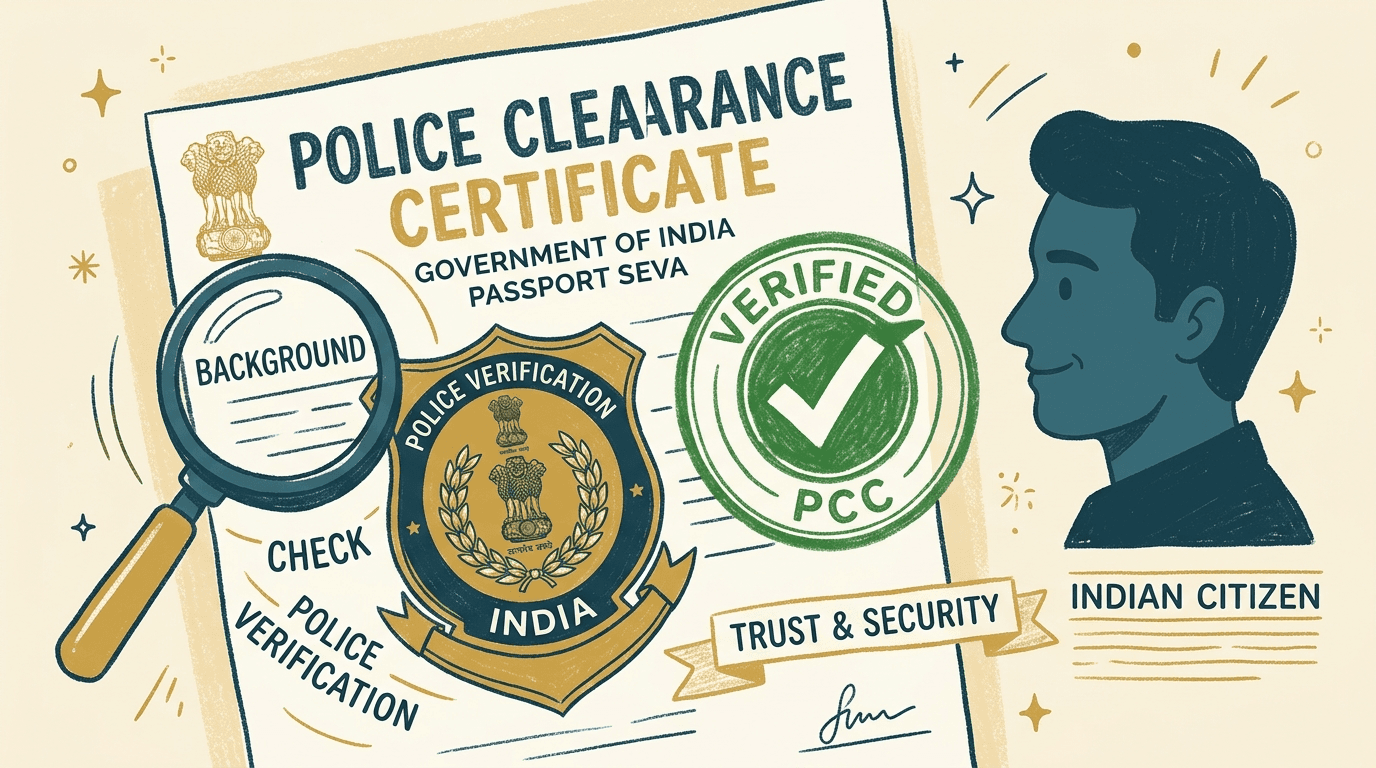
Police verification in India is an official background check conducted by local law enforcement. The process confirms your identity, verifies your home address, and checks for criminal records or pending court cases. It is most often required for passports, foreign visas through a Police Clearance Certificate, tenant registration, and job screening. The check combines digital database searches across national crime records with a physical visit from a local police officer.
Police and public order are State subjects under the Seventh Schedule of the Constitution of India. Verification rules and fees differ by state. On July 1, 2024, Section 223 of the Bharatiya Nyaya Sanhita, 2023 replaced Section 188 of the Indian Penal Code. This section provides the legal basis to enforce local tenant verification orders.
When Police Verification Is Required in India
Passports, consular clearances, tenant registration, and PSARA security mandates.
Police verification is triggered by government rules, statutory licensing, or employer risk policies. Four common situations require this check:
- Passport Issuance: Managed under the Passports Act, 1967 and the Passports Rules, 1980 by the Ministry of External Affairs. Routine passport applications verify citizenship, residential address, and clean criminal record.
- Police Clearance Certificate (PCC): Required by foreign governments and embassies for Indian citizens seeking foreign jobs, immigration, or permanent residency abroad.
- Tenant and Domestic Help Registration: Enforced by city police commissioners and local district magistrates. This step helps maintain safety records and track absconding offenders.
- Employment Background Screening: Conducted by employers in regulated sectors like banking, finance, healthcare, and IT. In addition, private security firms have a legal duty under Section 10 of the Private Security Agencies (Regulation) Act, 2005 to verify the character and background of every guard and supervisor before hiring.
Comparing Verification Modes: Passports, PCC, and Tenancy
Statutory frameworks, competent authorities, and cost structures side by side.
The requirements, authorities, and timelines depend on why you need verification:
| Verification Type | Governing Framework | Authority | Primary Purpose | Fee & Mode |
|---|---|---|---|---|
| Passport Verification | Passports Act, 1967 | RPO & local police station | Verify identity and criminal record before issuing passport | Included in passport fee; initiated via Passport Seva |
| Police Clearance Certificate (PCC) | Consular Guidelines | MEA and local police | Certify clean record for foreign work or immigration | ₹750; apply online via Passport Seva Kendra |
| Tenant Verification | BNS Section 223 / State Police Orders | Local police station / Commissionerate | Record tenant identity and prevent unauthorized occupancy | Free to nominal (₹0 to ₹500 depending on state) |
| Security Guard Verification | PSARA, 2005 (Section 10) | Controlling Authority & district police | Ensure guards have no disqualifying criminal convictions | Employer compliance; state-regulated fee |
Three Modes of Passport Police Verification
Pre-verification, post-verification, and exceptions for government servants.
According to operational rules published by Passport Seva, the Ministry of External Affairs uses three verification modes:
- Pre-Police Verification: The standard mode for most fresh passport applications. The local police check must finish before the passport office prints and mails your passport.
- Post-Police Verification: Used for urgent Tatkaal applications and select renewals. The passport is printed and sent first. The police check happens after dispatch. Applicants submit verified documents like Aadhaar and PAN to qualify.
- No Police Verification: Granted in specific cases, such as government employees who submit an official Identity Certificate, or young children whose parents hold valid passports with matching addresses.
If you need clearance for travel or work abroad, the Ministry of External Affairs PCC guidelines require an independent police check. Every applicant must attend an in-person appointment at a Passport Seva Kendra or Post Office Passport Seva Kendra.
How the Verification Process Works Step by Step
From portal submission to CCTNS database lookup and beat officer field visit.
Whether started through the passport portal or a state police site for tenant checks, verification follows five simple steps:
Submit Application and Documents
File on Passport Seva or State Police citizen portal. Upload proof of ID (Aadhaar, PAN, Voter ID), address proof, and photographs.
File Transfer to the Local Station
After initial review, the system routes your electronic file to the local police station (thana) covering your residence.
Digital Criminal Database Search
Police query your details across the CCTNS repository linking stations nationwide to screen for active FIRs, warrants, or convictions.
Physical Visit by Beat Officer
A local beat officer visits your residence to inspect original documents and speak with neighbors, or asks you to visit the local station.
Police Verification Report (PVR)
Officers complete field checks and submit an electronic PVR (Clear, Adverse, or Incomplete) to the passport office or employer.
“A Police Verification Report has three possible outcomes: Clear, Adverse, or Incomplete. Only a Clear report allows the passport office to dispatch your passport.”
Understanding PVR Outcomes: Clear, Adverse, and Incomplete
Interpreting verification outcomes and what triggers show-cause letters.
The status of the report determines your next steps:
- Clear: The officer verified your address, found your documents genuine, and discovered no criminal records. The passport office mails your passport, or the state portal issues a digital clearance certificate.
- Adverse: The police found an open criminal case, a past conviction, or false address information. An Adverse report pauses passport issuance. The passport office will send a show-cause letter asking you to attend an in-person hearing.
- Incomplete: The check could not finish because you were not home, lived at the address for too short a time, or missed submitting required documents. Incomplete reports require re-verification or personal clarification.
Legal Obligations for Landlords Under Bharatiya Nyaya Sanhita
Criminal penalties under BNS Section 223 replacing IPC Section 188.
Many people view tenant verification as optional. However, city police commissioners regularly issue orders that make tenant registration mandatory.
Under Section 223 of the Bharatiya Nyaya Sanhita, 2023, disobeying an order issued by a public servant is a criminal offense:
- Landlords who ignore tenant verification orders face simple imprisonment of up to six months, a fine up to ₹2,500, or both.
- If failing to verify a tenant endangers human safety or public health, the penalty rises to one year in prison, a fine up to ₹5,000, or both.
Submitting tenant details on the state police portal gives you a digital receipt. This receipt proves you complied with the law if a tenant is later investigated.
Digital Updates: CCTNS and the mPassport Police App
Tablet-based field verification cutting turnaround times from 15 days to under a week.
In the past, physical paperwork caused verification to take two to four weeks. New digital systems have cut this timeline substantially.
According to announcements from the Press Information Bureau, the government introduced the mPassport Police App across multiple states. Beat officers now carry mobile tablets linked directly to Passport Seva and CCTNS. Officers verify original IDs, take photos, and upload reports directly from the field. In cities like Delhi, this system has cut police verification times from 15 days down to roughly 5 days.
As explained in industry background verification analysis by AuthBridge, financial institutions combine police checks with real-time digital verification. Using instant PAN checks and Aadhaar verification helps firms detect fraud before starting ground checks.
What This Means for Organizations and Applicants
Three strategic takeaways for compliance officers, landlords, and applicants.
Looking across these legal rules and digital portals, three practical conclusions emerge:
- Tenant verification is mandatory law: Replacing Section 188 of the IPC with Section 223 of the BNS confirms that tenant verification is a statutory duty. Property owners must not treat it as optional. Because online portals are now available, digital submission is the fastest way for landlords to protect themselves from criminal liability.
- Domestic checks do not equal a PCC: Domestic police verification and a Police Clearance Certificate serve different purposes. A PCC requires a separate online application, a ₹750 fee, and an in-person passport office visit. You cannot use a local domestic police certificate for overseas visas or foreign jobs.
- Layer digital checks with field verification: Connecting CCTNS with mobile police apps shows that background checks in India are becoming faster and more centralized. For employers and financial institutions, official police checks remain vital for spotting criminal records. However, they work best when paired with automated digital identity checks during initial onboarding.
Frequently Asked Questions
Bhanujeet Choudhary
Head of Compliance, KYCKART
Published September 27, 2026
Disclaimer: This article provides general regulatory and operational information and does not constitute legal, regulatory, tax, or compliance advice. Organizations and individuals should consult legal counsel or official police notifications for specific jurisdictional requirements.
Next Steps for Enterprise
Combine Automated ID Checks with Ground Due Diligence
Integrate Aadhaar, PAN, and address verification into your employee and vendor onboarding workflows to filter risk before initiating formal police checks.
Explore Onboarding Solutionsarrow_forward