Loan Stacking Fraud in Digital Lending NBFCs: How Borrowers Bypass Bureau Lags (and How to Stop It)
Learn how digital NBFCs stop loan stacking fraud despite RBI four-times-a-month bureau lags using Account Aggregator, velocity rules, and device checks.
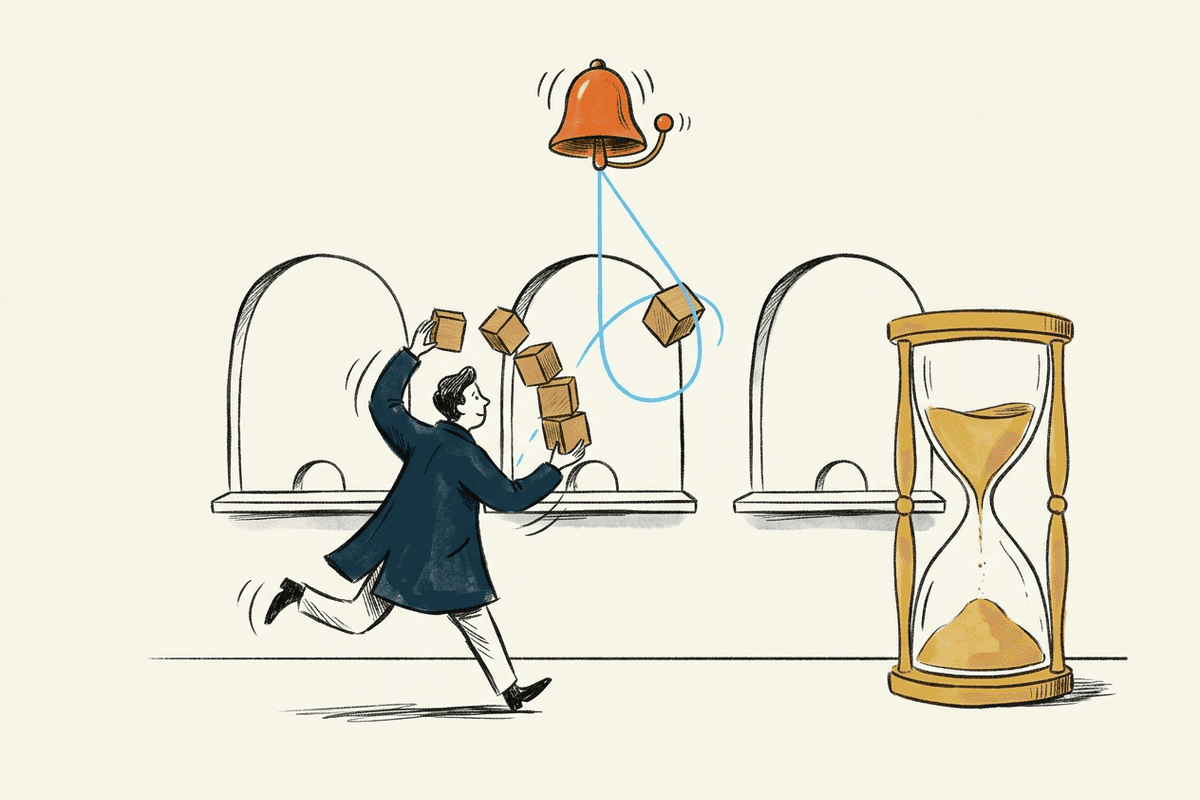
Loan stacking happens when a borrower applies for multiple loans across different Non-Banking Financial Companies (NBFCs) within hours or days before new debt appears on credit bureaus. Even after the Reserve Bank of India (RBI) moved NBFCs to four-times-a-month reporting in July 2026, a multi-day blind spot remains. Stopping it requires real-time Account Aggregator checks, velocity rules, device deduplication, and disbursal-time bureau refreshes.
Where things stand (November 2026)
Why digital NBFCs remain exposed despite faster bureau reporting
Digital NBFCs face acute loan stacking risk because instant disbursals collide with multi-day credit bureau lags. Gridlines explains that borrowers can apply to several lenders within days or hours while each sees a clean file. Each loan looks serviceable alone, but together they cause rapid defaults.
Small-ticket personal credit carries the heaviest volume. A FACE report using CRIF High Mark data across over 110 digital NBFCs, reported by Business Standard, shows Q1 FY27 scale:
- •Sanction share: Digital NBFCs accounted for 70% of personal loan sanction volumes (34 million loans worth ₹646.56 billion out of 49 million worth ₹2.99 trillion).
- •Ticket size: Digital personal loans averaged ₹18,802 (up ~15% from FY26), versus ₹70,025 for other NBFCs and ₹4.52 lakh for banks.
- •Book and delinquency: By June 2026, the digital NBFC personal loan book hit ₹1.54 trillion (up ~28% year-on-year), with 90+ days past due (DPD) at 1.4%.
From July 2026, the RBI tightened Credit Information Company (CIC) reporting for NBFCs. A CIC is a credit bureau such as CIBIL, Experian, Equifax, or CRIF High Mark. Under NBFC credit-reporting amendments reproduced by TaxGuru, NBFCs report on the 9th, 16th, 23rd, and month-end.
NBFCs file a full book by the 5th of the next month. They also send "incremental accounts" files (new, closed, updated, or overdue loans) within four calendar days of the 9th, 16th, and 23rd. That four-day filing lag plus ingestion time leaves a multi-day window before new loans appear on a bureau report.
| Dimension | Bureau-only underwriting (4x/month) | Layered pre-disbursal controls |
|---|---|---|
| Liability visibility | Multi-day gap before 4-day filing lands | Real-time inbound loan credits via bank statements |
| Multi-app bursts | Missed until next CIC cycle | Flagged via 7 to 14 day inquiry velocity |
| Stacking rings | Multiple identities checked in isolation | Linked via shared devices, IPs, and timing |
| Governance fit | Meets CIC filing cadence only | Supports Early Warning Signals (EWS) |
RBI digital lending and fraud governance duties for NBFCs
Two RBI frameworks set the baseline for digital lenders. Under the RBI Digital Lending Directions, 2025, Regulated Entities (REs), including NBFCs, must collect age, occupation, and income details before approving a loan. They cannot raise credit limits without a borrower request.
REs must report every Digital Lending App (DLA) or Lending Service Provider (LSP) loan to CICs, regardless of tenure. The rules cap Default Loss Guarantee (DLG, a partner's loss-sharing cover) from an LSP at 5% of the disbursed portfolio. NPA recognition stays with the NBFC.
Separately, the RBI Fraud Risk Management Directions for NBFCs, summarized by AZB & Partners, cover Upper, Middle, and ₹500 crore-plus Base Layer NBFCs. Covered lenders need a board-approved fraud policy, an Early Warning Signals (EWS) and Red Flagging of Accounts (RFA) framework, and a board fraud-monitoring committee (SCBMF).
How loan stacking plays out with and without real-time controls
The steps below use illustrative timestamps (T+0h, T+2h, T+4h, T+7d) to show how bureau lags work.
- Track A, App 1 (`T+0h`, illustrative): Borrower applies; bureau looks clean and NBFC disburses.
- Track A, Apps 2–3 (`T+2h`–`T+4h`, illustrative): Borrower applies to two more NBFCs before the next CIC date; both approve.
- Track A, Late update (`T+7d`, illustrative): Incremental CIC files arrive after the four-day lag, showing all three loans.
- Track B, App 1 (`T+0h`, illustrative): Lender 1 checks economic profile and cash flows before payout.
- Track B, App 2 flagged (`T+2h`, illustrative): Lender 2 spots an inquiry burst, inbound loan credit, and repeat device.
- Track B, Hold or block: Lender 2 pauses payout for EWS review until fresh bureau and cash-flow checks clear.
- 01
Track A: App 1 approved (T+0h, illustrative)
Borrower applies; bureau looks clean and NBFC disburses.
- 02
Track A: Apps 2 & 3 clear stale bureau (T+2h-T+4h, illustrative)
Borrower applies to two more NBFCs before the next CIC update; both approve.
- 03
Track A: Bureau updates too late (T+7d, illustrative)
Incremental CIC files land after the 4-day lag; all loans are disbursed.
- 04
Track B: App 1 checked (T+0h, illustrative)
Lender 1 verifies economic profile and cash flows before payout.
- 05
Track B: App 2 flagged (T+2h, illustrative)
Velocity, inbound loan credit, and device checks flag the second request.
High-risk signal: Hold or block payout
- 06
Track B: Disbursal-time refresh
Payout pauses for EWS review until fresh bureau and cash-flow checks clear.
Four pre-disbursal controls that intercept loan stacking
NBFCs can close the bureau blind spot by layering four checks before payout.
- •Account Aggregator (AA) and bank statement analytics: Under the RBI AA Directions, summarized by Legal 500, licensed NBFC-AAs move bank statements from banks (Financial Information Providers) to lenders (Financial Information Users) with consent. Per the Sahamati and CRIF Consent to Credit report, AA-enabled personal loans had lower 90+ DPD than non-AA loans (2.0% vs 2.2%). Precisa's 2026 data shows 38% of retail borrowers use AA, while 62% need PDF fallback. NBFCs therefore run hybrid AA-plus-PDF pipelines (see our Account Aggregator vs bank statement guide) to spot inbound loan credits and overlapping EMIs.
- •Velocity rules and disbursal-time refreshes: Gridlines notes that velocity checks flag multiple bureau pulls within 7 to 14 days, rapid repeat apps, and loan sizes below underwriting thresholds. A fresh bureau pull before payout catches loans opened after sanction.
- •Device intelligence: Per Gridlines, tracking shared device fingerprints, repeated IPs, emulators, and clustered submission timing across identities detects organised stacking rings.
- •Strategic holds and ecosystem signals: Risk-tiered payout pauses hold flagged profiles for EWS review without slowing low-risk borrowers. A May 2026 agreement between the Indian Cyber Crime Coordination Centre (I4C) and the Reserve Bank Innovation Hub (RBIH), announced by PIB, shares Suspect Registry identifiers to strengthen AI models like
MuleHunter.ai™across banks. KYCKART Fraud Intelligence combines velocity rules, KYC deduplication, and bank-statement screening.
What this means for NBFC risk and compliance teams
Read together, the Q1 FY27 volume figures and 2025–2026 RBI rules show a structural mismatch in digital lending. Digital NBFCs originate 70% of personal loan volume at an ₹18,802 average ticket, so teams rely on fast approvals. Yet four-times-a-month CIC reporting leaves a multi-day blind spot.
The practical implication is that an NBFC cannot rely on bureau pulls or LSP guarantees as its main shield. The Digital Lending Directions cap DLG cover at 5% and keep NPA provisioning on the NBFC's books. Thus, the NBFC bears the bulk of early-bucket losses from rapid defaults.
That gap points to three checks for your risk and tech teams:
- •Bureau-pull timing: Confirm your loan origination system refreshes the bureau report right before disbursal, not only at sanction.
- •AA and PDF parity: Since 62% of retail borrowers use PDF statements, verify both pipelines run identical inbound-loan rules.
- •EWS triggers: For ₹500 crore-plus NBFCs, check whether 7 to 14 day inquiry bursts and shared devices feed EWS payout-hold queues.
Frequently Asked Questions
Author: Bhanujeet Choudhary, Head of Compliance, KYCKART
Published: 15 November 2026
Disclaimer: This article is published for institutional compliance education and industry analysis. It does not constitute formal legal, regulatory, or technical advisory. Banking and NBFC institutions must reference primary circulars from the Reserve Bank of India and PMLA regulations.
KYCKART Fraud Intelligence
Catch stacked loan applications before disbursal
Talk to KYCKART about velocity rules, device signals and pre-disbursal fraud checks built for digital lending NBFCs.
Explore Fraud Intelligencearrow_forward