
Driving Licence Verification for Driver and Delivery Partner Onboarding
How to verify Indian driving licences through the central Sarathi registry, what the check confirms, and what fleet and delivery platforms must add before onboarding a driver.
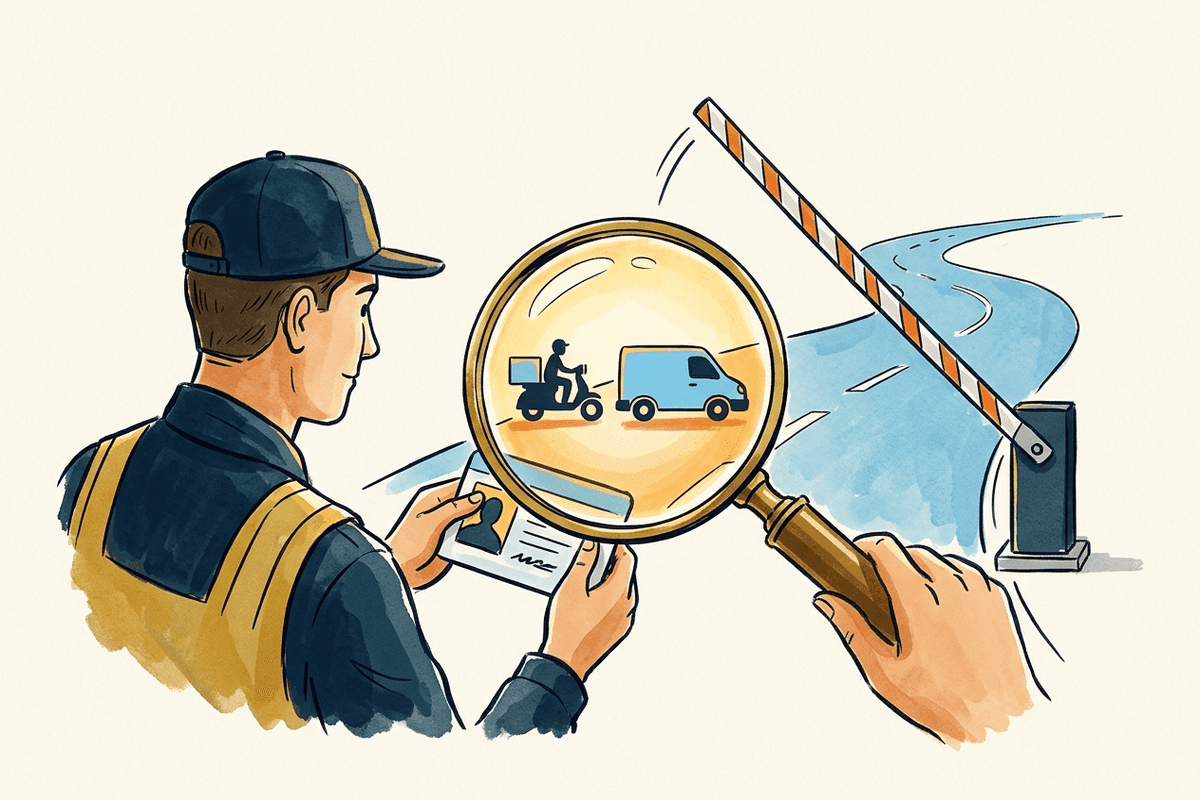
Driving licence checks against the central registry confirm that a licence exists, is active, and covers the right vehicle type. The query also pulls the holder’s official personal details. However, a registry check does not prove that the person holding the card is the real owner. It cannot evaluate driver road habits, traffic challans, medical fitness, or vehicle roadworthiness. Complete onboarding links registry checks with live selfie matching, background screening, and vehicle checks.
Where things stand (November 2026)
- •Under the Motor Vehicle Aggregator Guidelines, ride-hailing platforms must check valid driving licences, complete police screening seven days before onboarding, and maintain driver insurance. Goods delivery fleets follow commercial contracts and state gig-worker rules.
- •The Supreme Court of India ruled in late 2024 that drivers with a light motor vehicle licence can drive commercial transport vehicles under 7,500 kilograms without a separate transport badge.
- •Platforms must obtain clear consent under data protection rules before fetching driver records. This guide shares regulatory facts and practical steps.
What a Driving Licence Check Confirms and What It Misses
A central registry lookup validates official licence status and vehicle types, but safe onboarding requires extra verification steps.
Platforms query the central Sarathi registry to confirm active status, permitted vehicle classes, and demographic records.
Even so, registry lookups do not prove physical possession or driver conduct. Platforms add selfie face matching, police verification, and vehicle registration verification.
| Verification Dimension | What Central Registry Confirms | What Platform Checks Must Add |
|---|---|---|
| Licence Status | Active, expired, suspended, or cancelled status | Automated alerts for renewal dates |
| Vehicle Class | Allowed vehicle types (such as bikes or cars) | Physical check of the assigned vehicle |
| Personal Details | Name, date of birth, home address, and parent or spouse name | Match against IDs like Aadhaar or PAN |
| Driver Identity | Official photo from state records where available | Live selfie match to detect rented accounts |
| Driver Background | State licence history and issuing transport office | Criminal background checks and fine audits |
What the Licence Record Contains
When a platform queries the national licensing registry, it receives a standard set of licence and demographic data.
Under official Sarathi rules, an online query requires two inputs: the Driving Licence Number and the driver’s Date of Birth. The national database then returns a structured digital record.
| Data Category | Registry Response Fields | Fleet Onboarding Purpose |
|---|---|---|
| Licence Identity | Licence Number, Status, Issue Date | Confirms active legal authorization |
| Personal Details | Name, Father or Husband Name, DOB, Gender, Blood Group | Confirms identity and creates medical profiles |
| State Office Details | Issuing Transport Office Code, State, Address Details | Confirms origin and sets background check areas |
| Vehicle Classes | List of vehicle class codes with specific issue dates | Verifies right to drive assigned vehicle type |
| Validity Dates | Non-Transport Validity, Transport Validity, Special Badges | Shows expiry dates for private and commercial driving |
The registry tracks two validity tracks: Non-Transport Validity for private driving, and Transport Validity for commercial driving. It also records endorsements like hill driving or hazardous goods.
Transport vs Non-Transport Classes: Rules and Validity Tiers
Indian motor vehicle law sets different validity rules for commercial driving compared to private driving.
Under Section 14(2)(a) of the Motor Vehicles Act, commercial transport licences are effective for five years. For transport vehicles carrying hazardous goods, validity lasts three years, with renewal subject to refresher training.
In contrast, private non-transport licences follow age tiers under Section 14(2)(b):
- •Drivers under 30 receive licences valid until age 40.
- •Drivers aged 30 to 50 receive 10-year validity.
- •Drivers aged 50 to 55 receive licences valid until age 60.
- •Drivers aged 55 and older receive 5-year validity.
The 2019 legal amendment removed the old 30-day grace period from Section 14. A driving licence now expires on its exact printed date. Drivers have zero days of legal grace. Under Section 15 of the Act, a driver can apply to renew a licence one year before expiry or within one year after. Drivers who wait longer than one year post-expiry must retake the driving test.
Commercial passenger transport carries extra state rules. Under state motor vehicle rules, drivers carrying passengers in cabs or auto-rickshaws must hold an official Public Service Vehicle (PSV) badge after police screening. In contrast, delivery riders carrying parcels on two-wheelers or light cargo vans do not carry passengers. State rules exempt goods delivery riders from passenger badges, provided their licence covers the vehicle class.
LMV licence ruling, November 6, 2024
On November 6, 2024, a 5-judge Constitution Bench ruling of the Supreme Court of India in Bajaj Allianz General Insurance Co. Ltd. v. Rambha Devi & Ors. settled a key transport rule. The Court held that drivers holding a Light Motor Vehicle (LMV) licence can operate commercial transport vehicles up to 7,500 kilograms without a separate transport badge. However, vehicles exceeding 7,500 kilograms and hazardous cargo still require separate transport licensing.
A Five-Step Verification Workflow for Driver and Partner Onboarding
A secure onboarding process combines registry lookup, face matching, and vehicle checks into five simple steps.
Step 1: Consent and Input Capture
Capture the licence number, date of birth, and phone number. Platforms should display an itemised notice and obtain explicit consent under Section 6 of the Digital Personal Data Protection Act. Because gig partners are typically classified as independent contractors rather than traditional employees, relying on employment exemptions under Section 7(i) is legally risky, making explicit consent standard practice.
Step 2: Real-Time Registry Query Against Sarathi
Query the Sarathi database using licence number and date of birth. Confirm active status. Stop onboarding immediately if the licence is suspended, cancelled, or expired.
Step 3: Vehicle Class and Validity Check
Match licence classes to assigned vehicles: motorcycle with gear (MCWG) for two-wheelers, or LMV for delivery vans under 7,500 kilograms under Bajaj Allianz. If the licence has expired or lacks the correct category, reject or re-route the applicant.
Step 4: Identity and Face Match
Cross-check name and date of birth against foundational identity records using Aadhaar verification or PAN verification. Run a live selfie check and match the face against the official licence photo. If the score is low, hold the file for manual review to mitigate rented-account risks.
Step 5: Vehicle Check and Ongoing Tracking
Verify the vehicle Registration Certificate (RC), commercial insurance, and fitness papers. For passenger cabs, complete police background checks and confirm the driver badge. Set automated alerts 30 to 60 days before licence expiry.
- 01
Consent & Input Capture
Secure DPDP-compliant consent; capture DL number, date of birth, and mobile number.
- 02
Central Registry Query
Query Sarathi national registry using DL number and DOB; confirm active status.
Suspended, cancelled, or expired: Reject applicant
- 03
Vehicle Class & Validity Evaluation
Verify required vehicle class (MCWG, LMV) and check temporal validity dates.
Invalid class or expired licence: Reject or re-route applicant
- 04
Identity & Biometric Match
Cross-verify name and DOB with Aadhaar or PAN; run live selfie face match against DL photo.
Demographic or face mismatch: Hold for manual compliance review
- 05
Vehicle & Background Audit
Validate vehicle RC, insurance, and fitness; complete 7-day pre-onboarding police check.
Adverse criminal history or expired RC: Reject or hold for valid documents
- 06
Partner Approval & Ongoing Monitoring
Onboard driver partner and schedule automated re-verification before licence validity expires.
Common Onboarding Failure Points
India’s platform workforce comprised 77 lakh workers in 2020-21 and is projected to reach 2.35 crore by 2029-30, per a NITI Aayog study. As volume accelerates, onboarding without automated checks exposes platforms to five common traps.
- •Expired Licences With Zero Grace Period: Under the 2019 amendment, licences carry zero grace days after expiry. Letting a partner drive on an expired licence breaches Section 5 of the Motor Vehicles Act.
- •Vehicle Class Mismatches and Fines: Under Section 180 of the Act, an owner or platform permitting an unauthorized driver faces a fine of ₹5,000 and up to three months in prison. Drivers face a separate ₹5,000 fine under Section 181.
- •Name and Date Mismatches Across IDs: Spelling variations and date of birth discrepancies between driving licences and PAN or Aadhaar records stall automated signups and create manual backlogs.
- •Borrowed Accounts and Driver Swapping: Delivery accounts can be rented to unvetted drivers. Without live selfie matching against the official licence photo, platforms cannot confirm who is operating the vehicle.
- •One-Time Checks Without Expiry Alerts: Licences expire on age milestones or five-year transport terms. Platforms that verify details only at signup accumulate unlicensed drivers over time.
What This Means for Mobility Platforms and Logistics Fleets
For mobility platforms and logistics fleets, driver onboarding cannot remain a one-time document scan.
As fleets expand toward NITI Aayog’s projection of 2.35 crore gig workers, manual verification breaks down under high volume.
Read together, the zero grace period and Section 180 liability create immediate legal exposure when a licence lapses. Lapsed credentials can also invalidate commercial insurance claims.
Operational takeaway for fleet managers
- •Capture both licence number and date of birth on onboarding forms.
- •Map vehicle classes strictly: MCWG for two-wheelers and LMV under 7,500 kilograms for vans.
- •Collect explicit digital consent from gig partners under data privacy rules.
- •Set automated expiry alerts 30 and 60 days before licences lapse.
How KYCKART Supports Driver Onboarding
KYCKART provides unified verification tools that link driving licence validation with identity, vehicle, and background checks.
Through direct integrations, KYCKART’s individual verification suite checks licence records, vehicle classes, and validity dates in real time. Platforms pair licence lookups with Aadhaar verification, PAN verification, and live selfie matching. For fleet assets, KYCKART’s vehicle verification APIs check Registration Certificates, fitness, and insurance, while automated onboarding workflows enforce class rules and track renewals.
Frequently Asked Questions
Author: Bhanujeet Choudhary, Head of Compliance, KYCKART
Published: 11 November 2026
Disclaimer: This article provides general regulatory and operational analysis for informational purposes only and does not constitute legal, regulatory, tax, or compliance advice. Interpretive summaries of transport guidelines, judicial rulings, and data protection provisions reflect public statutory sources. Institutions should consult qualified legal or compliance counsel before establishing onboarding policies or operational compliance frameworks.
KYCKART Intelligence
Verify Drivers and Delivery Partners Before the First Trip
Check licence status, vehicle class and validity, match identity with a live selfie, and track renewals in one onboarding workflow.
Explore Onboarding Solutionsarrow_forward